
Celeris Realtime
A public-beta, binary-first WebSocket platform built in Rust for high-throughput pub/sub across multiple nodes and regions.
RustWebSocketsDistributed Systems
Trypema is a Rust sliding-window rate limiter with local, Redis, and hybrid providers. Each provider supports binary admission through the Absolute strategy and gradual probabilistic load shedding through the Suppressed strategy.
Version 2.0.0 is released. It is a breaking redesign: providers are constructed independently, configuration uses validated semantic types, reads expose live state, and conditional writes return structured outcomes.
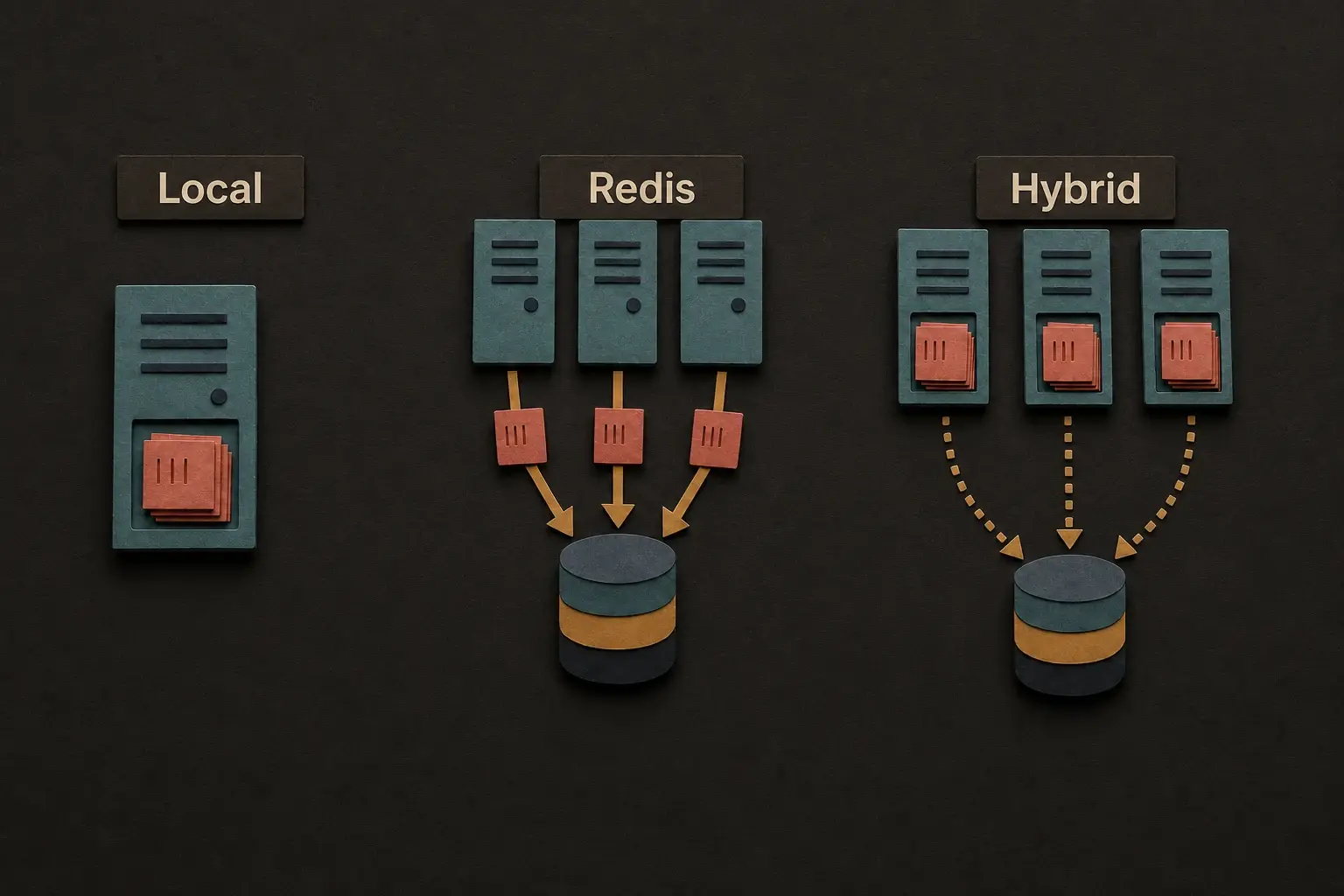
| Provider | State and I/O | Best fit |
|---|---|---|
| Local | In-process, synchronous | One process owns the limit |
| Redis | Shared Redis state, async I/O per operation | Instances need the freshest shared view |
| Hybrid | Local admission with periodic Redis synchronization | High throughput with bounded visibility lag |
Redis and hybrid require Redis 7.2+ and exactly one runtime feature: redis-tokio or
redis-smol. Admission is best-effort under concurrency; concurrent callers can temporarily
overshoot a limit.
Absolute returns an allowed or rejected decision. Rejections include retry_after: Duration,
the configured window_size, and remaining_after_waiting, the capacity released when the oldest
live bucket expires.
Suppressed progressively increases the probability of shedding work as pressure rises, then
uses the hard limit as its final boundary. Reads return a SuppressedRateLimitSnapshot containing
total usage, declined usage, and the current suppression factor.

Absolute get calls return the live total; suppressed reads return a structured snapshot. Unknown
keys produce zero-valued results without creating state. Expired history may be evicted lazily
during a read.
inc stores a key's computed window capacity when the key is created. Later increments keep that
capacity until a matched conditional write replaces it. set_if replaces history after a
comparator match; set_if_preserve_history can retain the newest or oldest side. Both return
ConditionalSetOutcome, and a matched zero removes the key.

[dependencies]
trypema = "2"
use trypema::{
    BucketSize, RateLimit, RateLimitDecision, RateLimiterBuilder, WindowSize,
    local::LocalRateLimiterProvider,
};

let provider = LocalRateLimiterProvider::builder()
    .window_size(WindowSize::minutes_or_panic(1))
    .bucket_size(BucketSize::milliseconds_or_panic(10))
    .build()
    .unwrap();

let rate = RateLimit::per_second_or_panic(5.0);

match provider.absolute().inc("user_123", &rate, 1) {
    RateLimitDecision::Allowed => {}
    RateLimitDecision::Rejected { retry_after, .. } => {
        println!("retry in {retry_after:?}");
    }
    RateLimitDecision::Suppressed { .. } => unreachable!(),
}
Builders return an Arc and start stale-state cleanup by default. Use disable_cleanup() while
building when cleanup is unwanted; start_cleanup_loop() and stop_cleanup_loop() are
idempotent after construction.
[dependencies]
trypema = { version = "2", features = ["redis-tokio"] }
redis = { version = "1", features = ["aio", "tokio-comp", "connection-manager"] }
tokio = { version = "1", features = ["full"] }
Redis and hybrid providers receive a Redis connection directly through their own builders. Hybrid
also accepts a validated SyncInterval; smaller values reduce visibility lag and increase Redis
work. Its authoritative get synchronizes with Redis and overlays local pending counts, while
get_estimate may answer from initialized local state.

The published benchmarks remain historical measurements, not universal performance promises. They compare fixed workloads across throughput, tail latency, and hot-key contention. Results vary with hardware, runtime, Redis placement, configuration, and competing load. The Redis and hybrid results compare backend cost, not identical behaviour, because the hybrid fast path accepts bounded visibility lag between synchronizations.

WindowSize, BucketSize, HardLimitFactor, SuppressionFactorCachePeriod, and SyncInterval
make units and constraints explicit.
Absolute totals and suppressed snapshots include only live buckets; unknown keys remain absent.
Comparator-gated writes replace history or preserve its newest or oldest side, with zero deleting state.
Cleanup starts by default and can be disabled or controlled through idempotent start and stop methods.
A public-beta, binary-first WebSocket platform built in Rust for high-throughput pub/sub across multiple nodes and regions.

Framework-agnostic RBAC library for Rust with composable AccessPolicy rules and plug-and-play middleware for actix-web and tower/axum.
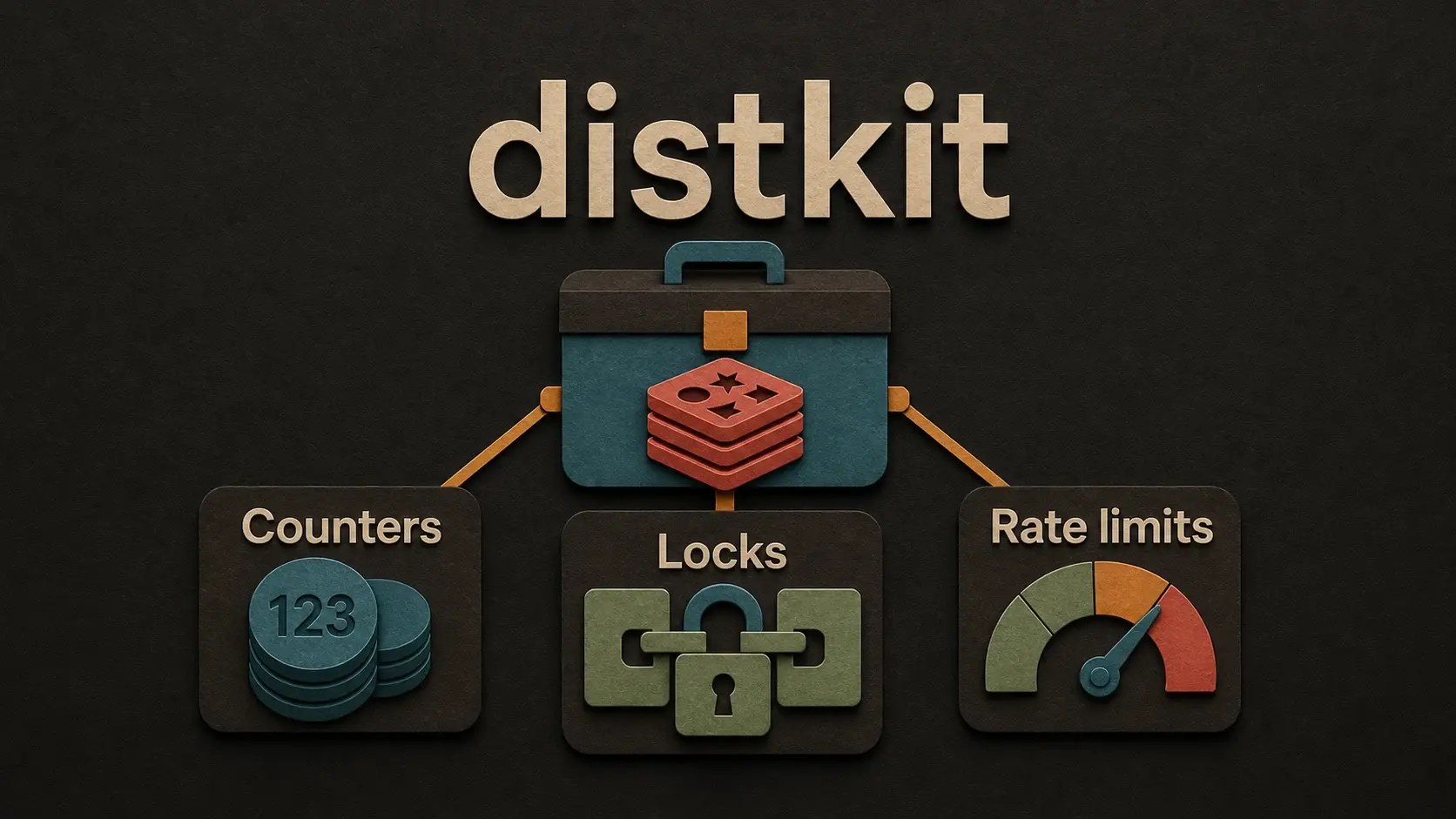
A Rust toolkit of distributed systems primitives backed by Redis. Strict and lax counters, instance-aware counters with automatic dead-instance cleanup, distributed locks (Mutex and RwLock), and sliding-window rate limiting.
Available for senior engineering roles, consulting, and architecture reviews.